African Safari
The Allure of the Wild: What is an African Safari?
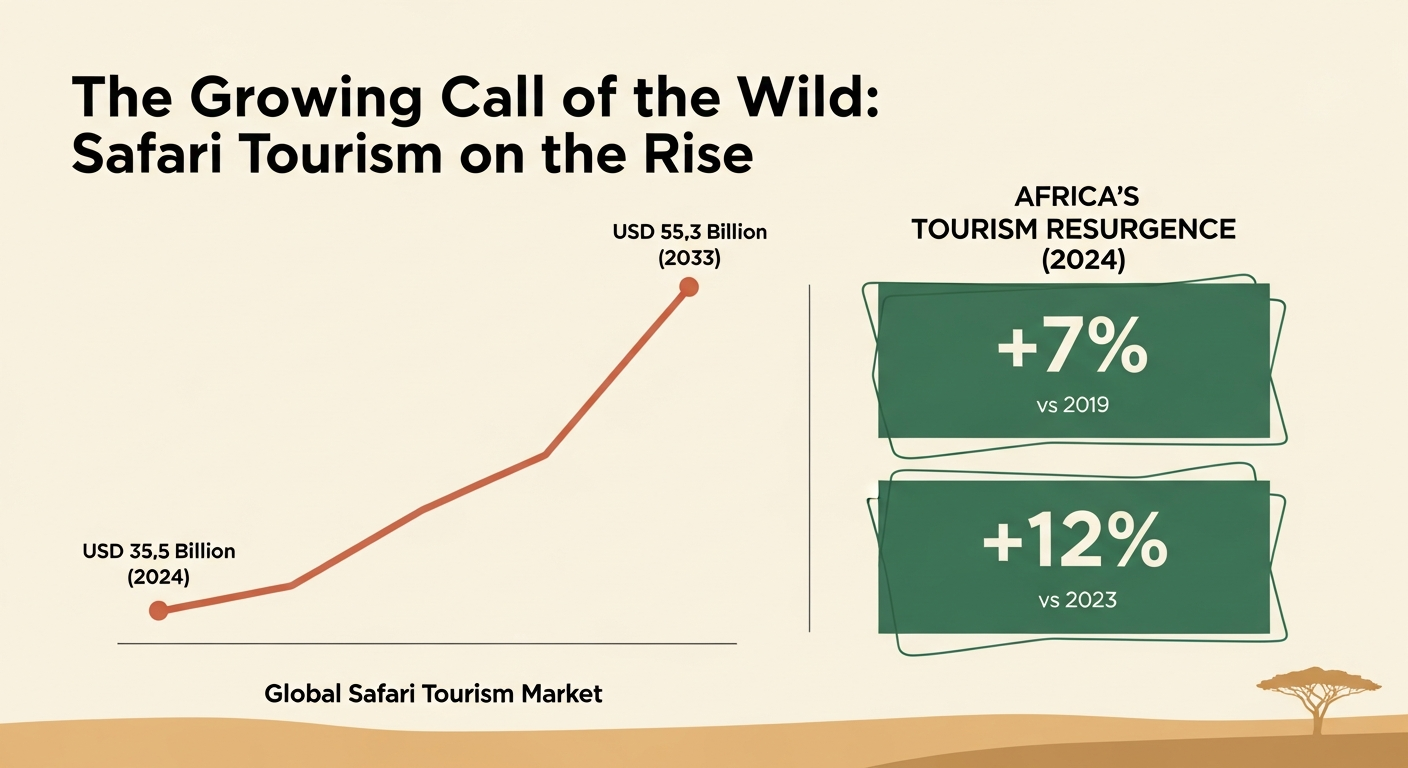
The global demand for safari experiences is growing significantly, alongside a strong resurgence in Africa's overall tourism sector.
An African safari is far more than a mere holiday; it is an immersive journey into the heart of nature's grandest theatre. The very word "safari," derived from the Swahili term for "journey," evokes images of vast, untamed landscapes, abundant wildlife, and the thrill of discovery. At its core, an African safari is an expedition to observe and experience wild animals in their natural habitats. This involves traversing diverse ecosystems, from sun-drenched savannas and dense forests to arid deserts and intricate river systems, all while seeking encounters with Africa’s iconic fauna. The continent’s rich biodiversity offers an unparalleled spectacle, where the raw beauty of the natural world is on full display. The global safari tourism market underscores this allure, valued at USD 35.5 Billion in 2024 and projected to reach USD 55.3 Billion by 2033, exhibiting a growth rate of 5.06% during 2025-2033. This indicates a robust and enduring fascination with the African Safari as a travel experience.
Embarking on a Journey of a Lifetime
Embarking on an African safari is a transformative experience, a pilgrimage for many seeking connection with the wild and a profound sense of adventure. It is a journey that appeals to a deep-seated human fascination with the natural world, offering a stark contrast to the complexities of modern urban life. The anticipation of spotting a lion on the hunt, a herd of elephants at a waterhole, or a leopard draped languidly over a tree branch creates a unique kind of excitement that few other travel experiences can match. This is an opportunity to witness ecosystems in their purest form, observe intricate animal behaviors, and gain a new appreciation for the delicate balance of nature. With 1.4 billion international trips recorded globally in 2024, Africa is demonstrating a strong rebound, finishing +7% versus 2019 and +12% versus 2023, showing demand is firmly back. This surge highlights the enduring appeal of the continent as a premier destination for transformative journeys.
Understanding the Spirit of the African Safari
The spirit of an African safari is characterized by a profound respect for wildlife and its environment, coupled with an adventurous curiosity. It’s about embracing the unexpected, understanding the rhythms of the natural world, and immersing oneself in landscapes that have remained largely unchanged for millennia. This spirit encourages patience, keen observation, and a sense of wonder at the resilience and diversity of life. It’s an invitation to slow down, to listen to the sounds of the bush, and to truly connect with the earth in its most primal state. This deep connection forms the essence of the safari experience, fostering a sense of belonging to something ancient and powerful.
The Call of the Wild: Beyond the Big Five
While the famed "Big Five"—the lion, leopard, elephant, rhinoceros, and buffalo—are undeniably magnificent draws and a cornerstone of the safari experience, the true magic of an African safari lies far beyond this iconic grouping. The continent teems with an astonishing array of wildlife, from the majestic giraffe browsing acacia leaves to the cheetah, the fastest land mammal, in pursuit of prey. Birdlife is extraordinarily diverse, with vibrant species painting the skies and serenading the dawn. Even the smaller creatures—the stealthy jackal, the industrious dung beetle, the playful monkeys—contribute to the rich tapestry of life. Observing these animals in their natural behaviors—social interactions, hunting strategies, and maternal care—offers an unparalleled education in the intricacies of survival and adaptation. The Big Five are undoubtedly a highlight, but appreciating the full spectrum of biodiversity enriches the safari experience immeasurably.
A Tapestry of Landscapes: From Savannas to Mountains
Africa’s safari destinations are as varied as the wildlife they host, offering a breathtaking tapestry of landscapes. The vast, golden savannas of Kenya and Tanzania, epitomized by the Serengeti and the Masai Mara, are iconic plains that host the Great Migration, a spectacle of millions of wildebeest and zebras traversing the land. These regions are prime examples of the classic East African savanna that draws countless visitors each year. To the south, Botswana offers the unique Okavango Delta, an inland oasis where water-based safaris reveal a different dimension of wildlife viewing, and Chobe National Park, renowned for its enormous elephant herds. South Africa boasts the renowned Kruger National Park and its surrounding private reserves, offering exceptional game viewing and a variety of ecosystems, from bushveld to forests. Further afield, the misty mountains of Uganda and Rwanda provide the setting for intimate encounters with mountain gorillas, showcasing the continent’s dramatic geographical diversity. These varied National Parks cater to a wide range of safari preferences.
Cultural Immersion and Connecting with Local Communities
A truly profound African safari experience extends beyond wildlife sightings to embrace cultural immersion. Engaging with local communities offers invaluable insights into the traditions, customs, and daily lives of the people who share these lands with the wildlife. This interaction can range from visiting Maasai villages and learning about their ancestral way of life to understanding the efforts of local conservation initiatives. Respectful engagement allows for a deeper appreciation of the human element in Africa’s story, fostering mutual understanding and providing economic benefits to the communities that are crucial custodians of these natural heritage sites. Such experiences often enrich the overall journey, transforming a wildlife-viewing trip into a holistic cultural exploration and contributing to a more meaningful safari experience.
A Journey of Discovery, Learning, and Personal Growth
The cumulative effect of encountering Africa's raw beauty, its magnificent wildlife, and its diverse cultures is one of profound personal growth. An African safari is an unparalleled opportunity for introspection and learning. Witnessing the sheer power and resilience of nature can foster a deep sense of awe and humility. It encourages a shift in perspective, reminding individuals of their place within the larger ecosystem. The challenges and unpredictable nature of safari travel can build resilience and adaptability. Furthermore, the quiet moments of reflection, watching the sunset over the savanna or listening to the nocturnal symphony of the bush, can lead to a renewed sense of peace and a deeper connection with oneself and the natural world, a key component of safari life.
Choosing Your Safari Destination: East vs. Southern Africa
Selecting the right African safari destination is crucial for tailoring the safari experience to individual preferences. While both East and Southern Africa offer exceptional wildlife viewing, they present distinct landscapes, migration patterns, and concentrations of animals. Understanding these differences is key to crafting an unforgettable journey. East Africa is often synonymous with the classic savanna safari and the dramatic Great Migration, drawing inspiration from documentaries often featured on National Geographic. Southern Africa, on the other hand, is celebrated for its diverse landscapes, high wildlife densities in specific areas, and a wider range of safari activities beyond traditional game drives.
East Africa: The Classic Migration and Iconic Plains
East Africa, particularly Kenya and Tanzania, is the quintessential safari destination, renowned for its vast open plains and the planet's largest mammal migration. The Serengeti National Park in Tanzania and the Masai Mara National Reserve in Kenya form the heart of this incredible phenomenon, where over 1.5 million wildebeest and hundreds of thousands of zebras undertake a perilous journey in search of greener pastures. This spectacle, peaking typically between July and October, attracts predators like lions, cheetahs, and hyenas, offering front-row seats to nature's most dramatic drama. Beyond the migration, Amboseli National Park in Kenya provides breathtaking views of Mount Kilimanjaro as a backdrop to large elephant herds, while Samburu National Reserve offers a chance to see unique species adapted to arid conditions. This region epitomizes the classic African Safari.
Southern Africa: Diverse Landscapes and Wildlife Concentrations
Southern Africa presents a contrasting yet equally compelling safari experience, characterized by greater geographical diversity and often higher wildlife concentrations in specific areas. Botswana, with the unique Okavango Delta, offers a unique ecosystem where wildlife thrives in a watery labyrinth, supporting water-based activities like mokoro excursions and boat trips alongside traditional game drives. Chobe National Park is famous for its staggering numbers of elephants. South Africa, home to the Kruger National Park, offers accessibility and a high probability of seeing the Big Five, while its private game reserves, such as Sabi Sands, are legendary for leopard sightings and offer a more exclusive, off-road viewing experience. Zambia is renowned for its pioneering walking safaris in areas like South Luangwa. Etosha National Park in Namibia offers a unique arid landscape centered around its vast salt pan, attracting abundant wildlife to its waterholes.
The Specialized Safari: Gorilla Trekking in Volcanoes National Park (Rwanda/Uganda)
For an experience that transcends the typical safari, primate trekking in the dense rainforests of Uganda and Rwanda offers an unparalleled encounter. Volcanoes National Park in Rwanda and Bwindi Impenetrable Forest in Uganda are world-renowned for their populations of endangered mountain gorillas. Gorilla Trekking through lush, mist-shrouded mountains to spend an hour in the presence of a gorilla family is an emotionally charged and profoundly moving experience. These treks require a moderate level of fitness but reward participants with intimate observations of these gentle giants in their natural, undisturbed habitat. Chimpanzee trekking in Uganda’s Kibale Forest offers another extraordinary opportunity to observe our closest primate relatives. These specialized safaris provide a unique perspective on Africa’s incredible biodiversity, moving beyond the traditional game drive.
Types of Safari Experiences: Immersive Ways to Explore
The classic image of an African safari often involves a vehicle traversing the bush, but the reality is a far richer tapestry of exploration. Various safari styles cater to different interests, fitness levels, and desired levels of immersion, allowing travelers to connect with the wilderness in deeply personal ways. Beyond the traditional game drive, adventurous Safari Goers can opt for more intimate and thrilling encounters with the natural world. These varied approaches ensure that every safari experience can be uniquely tailored.
The Traditional Game Drive: Exploring the Wilderness by Vehicle
The most common and accessible form of safari, the traditional game drive, involves exploring wildlife areas in specially adapted open-sided 4x4 vehicles. Accompanied by experienced guides and trackers, these drives allow for comfortable and safe viewing of animals from a distance. Vehicles are designed for optimal visibility, and guides possess extensive knowledge of animal behavior, tracks, and preferred habitats, maximizing the chances of exciting sightings. These game drives are typically conducted in the early morning and late afternoon when animals are most active. This staple of the African Safari offers an excellent introduction to wildlife viewing.
Walk-Thru Safaris: An Intimate Ground-Level Perspective
Walking safaris offer a truly intimate and visceral connection with the African bush. Led by armed rangers and experienced guides, these Walk-Thru Safari excursions allow participants to explore the wilderness on foot, engaging all senses. The emphasis shifts from passive observation to active engagement with the environment. Guests learn to read tracks, identify plants, and understand the subtle signs of wildlife presence. While exhilarating, walking safaris require a higher level of physical fitness and a greater appreciation for the raw, untamed nature of the wild. Parks like South Luangwa in Zambia are particularly famous for pioneering this immersive style, providing a profound connection with safari life.
African Sky Safari: A Breathtaking Aerial View
For a panoramic and awe-inspiring perspective, an African Sky Safari offers an unforgettable experience. Hot air balloon safaris, particularly popular over the plains of the Serengeti and Masai Mara, provide a tranquil and majestic way to witness the landscape and its inhabitants. Drifting silently above the awakening bush as the sun rises, guests can observe herds from a unique vantage point, often witnessing the Great Migration from above. Helicopter tours also offer access to remote areas and breathtaking aerial views of natural wonders like Victoria Falls or the Okavango Delta. This elevated viewpoint provides a completely different dimension to the safari experience.
Water-Based Safaris: Canoeing, Boat Trips, and Mokoro Excursions
Certain regions of Africa, most notably the Okavango Delta in Botswana and the Lower Zambezi National Park in Zambia, are renowned for their water-based safari experiences. These safaris offer a unique way to encounter wildlife, from large herbivores coming to drink at riverbanks to a dazzling array of birdlife. Canoeing safaris allow for quiet, close-up encounters with hippos, crocodiles, and elephants, while boat trips provide a stable platform for viewing. Mokoro excursions, a traditional dugout canoe experience in Botswana, offer a serene and intimate way to navigate the delta's channels, immersing guests in the aquatic ecosystem. These excursions provide a unique alternative to traditional game drives.
Other Unique Encounters: Horseback and Photography Safaris
Beyond the standard offerings, specialized safaris cater to niche interests. Horseback safaris, available in select areas like Botswana's Okavango Delta, allow riders to approach wildlife at a similar eye-level, offering a non-intrusive and exhilarating way to explore the plains. Photography safaris are designed for enthusiasts, with expert guides and specialized vehicles that optimize photographic opportunities. These trips often focus on specific wildlife subjects or landscapes, with an emphasis on lighting, composition, and capturing the perfect shot. While not a traditional game drive, these activities significantly enhance the diverse safari experience.
Planning Your Dream African Safari: Expert Guidance for the Safari Goer
Embarking on an African safari is a significant undertaking, and meticulous planning is key to ensuring a seamless and unforgettable experience. From understanding the best time to travel to choosing suitable accommodation and crafting a personalized itinerary, expert guidance can transform aspirations into reality for any Safari Goer. This phase is crucial for navigating the complexities of various National Parks, booking the right Safari Lodge or safari camps, and ensuring all aspects of your African Safari are optimized.
Best Time to Go: Understanding Seasons and Wildlife Patterns
The "best" time to go on an African safari is subjective and depends heavily on the desired experience and region. Generally, the dry season (typically May to October in East Africa, and April to November in Southern Africa) is considered prime time for game viewing. During these months, vegetation is sparser, and animals congregate around water sources, making them easier to spot during game drives. However, the wet season, while presenting challenges like thicker bush and scattered wildlife, offers lush landscapes, fewer tourists, and opportunities to witness breeding seasons and newborn animals. For the Great Migration, timing is critical, with different months offering different viewing experiences along the migration route in places like the Serengeti and Masai Mara.
Accommodation Choices: From Rustic Safari Camps to Luxury Safari Lodges
Safari accommodation ranges from rustic, canvas-tented camps that offer a close-to-nature experience with basic comforts, to opulent lodges providing unparalleled luxury and amenities. Safari Lodges often feature private plunge pools, gourmet dining, and expansive views, while safari camps might offer a more intimate connection with the wild. Private conservancies often offer exclusive camps with more flexibility in game viewing, including night drives and off-road excursions. Premier safari camps' rates are increasing, with camps that were under $2,000 per person per night in 2019 now trending above $3,000 pppn for 2026, indicating a strong demand for high-end experiences. These choices significantly shape the overall safari experience.
Crafting Your Itinerary: Private Custom Safaris and Tailored Adventures
The most rewarding safaris are often those meticulously tailored to individual interests and preferences. Private Custom Safaris allow for complete control over the itinerary, pace, and choice of lodges and activities. This approach ensures that travelers can focus on their specific interests, whether it's photography, birdwatching, or a particular wildlife species. Private Classic Safaris offer a refined and often exclusive way to experience these tailored journeys. Working with experienced safari planners is invaluable in navigating the complexities of different regions, conservation areas, and logistical requirements to build a truly bespoke adventure. Travelers are increasingly opting for multi-country itineraries, with 34% of travelers choosing this option in 2024, up from 29% in 2022, highlighting a trend towards more comprehensive African Safari experiences.
The Role of Your Safari Director: Expertise and Seamless Execution
A skilled Safari Director or specialist travel advisor is an indispensable asset in planning and executing a successful safari. These experts possess in-depth knowledge of destinations, lodges, and the intricacies of wildlife behavior. They handle all logistical aspects, from flight bookings and transfers to visa requirements and health advice. Their expertise ensures that the itinerary is feasible, maximizes wildlife viewing opportunities, and aligns with the traveler's budget and expectations. A good Safari Director acts as a trusted partner, offering personalized recommendations and troubleshooting any issues that may arise, thereby ensuring a stress-free and enriching journey. Online travel agencies made up approximately 44.3% of indirect bookings in 2025, demonstrating the importance of expert guidance.
Essential Preparations for Your African Safari Adventure
Beyond booking your dream safari, several practical preparations ensure your journey is safe, comfortable, and enriching. Proactive planning in health, packing, and understanding local customs significantly enhances the overall safari experience. This preparatory phase is critical for ensuring you are ready for the rigors and wonders of an African Safari.
Health and Safety: Vaccinations, Medications, and Insurance
Consulting with a travel health professional well in advance of your departure is paramount. Recommended vaccinations and malaria prophylactics vary by region, and it's crucial to obtain these in time. Carrying a personal first-aid kit with essential medications, including those for common ailments like headaches, stomach upset, and allergies, is advisable. Comprehensive travel insurance is non-negotiable, covering medical emergencies, trip cancellations, and lost luggage. Adhering to the advice of guides regarding wildlife encounters and general safety protocols is essential for a secure safari. This diligence is vital for all National Parks and surrounding areas.
Packing Essentials: What to Bring for Comfort and Functionality
Packing for an African safari requires a balance of comfort and practicality. Neutral-colored, lightweight clothing is recommended to blend with the environment and avoid startling wildlife during game drives. Layers are advisable, as temperatures can fluctuate significantly between day and night. Essential items include comfortable walking shoes, a wide-brimmed hat, sunglasses, high-SPF sunscreen, insect repellent, and a reusable water bottle. Binoculars are indispensable for wildlife viewing, and a good camera with extra batteries and memory cards will help capture the incredible sights. While many Safari Lodges and safari camps provide toiletries, packing your own preferred items is wise.
Deepening Your Experience: The African Safari Journal and Field Guide
To truly maximize the learning and enjoyment of a safari, consider bringing along a field guide specific to the region you are visiting. These guides can help identify birds, mammals, plants, and even tracks, transforming passive observation into an active learning experience. Keeping an African Safari Journal is also highly recommended. Documenting daily sightings, reflections, emotions, and interesting anecdotes can create a rich personal record of your journey. This practice not only enhances mindfulness during the trip but also provides a cherished keepsake to revisit the memories and lessons learned long after you have returned home, enriching the safari life.
Understanding "Game" and the "Big Five"
The term "game" in the context of safaris refers to wild animals, a legacy from the colonial era when hunting was prevalent. While hunting is now largely prohibited in most safari destinations, the term persists, and "game viewing" or "game drives" are common phrases. The "Big Five" is a term coined by big-game hunters for the five most difficult and dangerous animals in Africa to hunt on foot: the lion, leopard, elephant, rhinoceros, and buffalo. Today, these animals are the most sought-after sightings for tourists, representing the pinnacle of the safari experience. While their allure remains powerful, it is important to remember that an African safari offers a wealth of other magnificent creatures and ecological wonders to discover, making the pursuit of solely these five a limited perspective on the rich biodiversity found in National Parks like Kruger National Park.
Conclusion
An African Safari is an expedition that transcends mere travel; it is an encounter with the raw, untamed spirit of our planet. From the iconic plains of East Africa, thundering with the Great Migration, to the intricate waterways of the Okavango Delta and the dense rainforests harboring endangered primates, the continent offers a breathtaking diversity of landscapes and wildlife. The allure lies not only in the chance to witness magnificent creatures like the Big Five but also in the profound connection forged with nature, the immersion in vibrant cultures, and the personal journey of discovery. Whether embarking on a traditional game drive, a humbling Walk-Thru Safari, or a serene mokoro excursion, each experience offers a unique lens through which to appreciate the intricate web of life.
The planning of such an adventure is made seamless and profoundly rewarding with the assistance of experts, such as a dedicated Safari Director, who can craft Private Custom Safaris and Private Classic Safaris tailored precisely to your desires. Destinations like Kruger National Park and Etosha National Park in Southern Africa, alongside the famed Serengeti in East Africa, offer distinct yet equally captivating safari experiences. Specialized adventures, such as Gorilla Trekking in Volcanoes National Park, or the breathtaking perspective of an African Sky Safari, add unique dimensions to the journey. While the pursuit of the Big Five is a classic element, the true essence of safari life is found in the holistic appreciation of the wild, the cultural exchanges, and the quiet moments of reflection. For those seeking comprehensive knowledge, resources like the African Safari Journal and Field Guide can deepen understanding. It's important to distinguish these authentic wilderness experiences from places like OHIO SAFARI PARK, which offer a different kind of interaction with wildlife. Ultimately, an African Safari is an investment in memories that last a lifetime, a testament to the enduring power of the wild and the transformative impact of embarking on a journey of discovery.