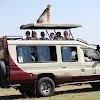
Planning a Private Family Safari in Africa: The Multi-Generational Paradox
We thoroughly tested private family safari in Africa to help you make an informed decision. Planning a private family safari in Africa for three generations isn't a logistics challenge — it's a relationship challenge wrapped inside one.
The rise of what travel insiders call "legacy travel" has shifted the entire conversation. Families aren't simply booking trips to see places; they're engineering moments of genuine connection across grandparents, parents, and children who may spend the rest of the year separated by time zones and schedules. According to the Virtuoso Luxury Travel Trend Report, 54% of luxury travelers plan to take a multi-generational trip in the coming year — a number that reflects something deeper than wanderlust.
The friction point is almost always the same: a 72-year-old with arthritic knees and a 9-year-old with boundless energy do not share a travel pace. Grandparents may treasure a slow morning watching the savanna come alive from a private viewing deck. Teenagers want to track lions on foot. Parents are navigating both, often at the expense of their own experience.
This is precisely why "slow travel" — the deliberate, unhurried approach to exploring a destination — has become a defining feature of meaningful family expeditions. As Luxury Travel Advisor notes, the shift toward private stays "is driven by families wanting to reconnect in a controlled, exclusive environment." Slowing down creates the space for that reconnection to actually happen.
Pre-packaged group tours cannot accommodate this reality. A private family safari in Africa, built from scratch around your specific family's rhythms, ages, and ambitions, is the only structure flexible enough to hold it all together — and that's precisely where bespoke planning begins to earn its place.
Solving the Fitness Gap in Private Itineraries
The single greatest advantage of custom African safari itineraries is their ability to bend around people — not the other way around.
In a multi-generational group, physical ability is rarely uniform. Grandparents may cherish a slow, vehicle-based game drive at sunrise, while teenagers want to track wildlife on foot with a ranger. Pre-packaged group tours treat this as an unsolvable conflict, forcing everyone onto the same schedule regardless of what they actually want or can manage. Private tours dissolve that tension entirely through what planners at Odyssey Safaris call "split-day" logistics — where the group intentionally diverges for part of the day and reunites for shared meals or evening sundowners.
Lodge selection is where this flexibility takes root. Choosing the right property means looking beyond aesthetics to activity range — lodges that offer walking safaris alongside vehicle-based game viewing give every family member a genuine choice. In practice, a well-chosen camp in Kenya or Botswana can accommodate a grandparent enjoying a guided birdwatching session on the veranda while younger guests complete a full walking circuit with a professional ranger. That kind of layered programming doesn't happen by accident; it's built deliberately into custom-designed private safari itineraries featuring handpicked luxury lodges, private conservancy access, and professional local guiding across countries like Kenya, Tanzania, Botswana, and Rwanda.
Where you choose to base that lodge matters just as much as the lodge itself. Families who ask why they should choose a private conservancy over national parks quickly discover that the answer is inseparable from the fitness question. National parks enforce fixed roads, shared sightlines, and strict timing — constraints that compound when you're managing three generations with different energy levels. A private conservancy removes those constraints entirely, allowing your guide to slow the vehicle, reposition off-road, or cut a morning short without a park regulation standing in the way. That freedom isn't incidental to solving the fitness gap — it's central to it.
Insider Tip: Your private guide holds the real-time key to pace. A skilled local guide reads energy levels, watches body language, and adjusts without being asked — shortening a walk, calling the vehicle early, or simply slowing down to let a slower walker set the rhythm. That sensitivity is impossible to replicate in a group tour where a single guide manages twelve strangers on a fixed clock.
Where you feel that flexibility most is on the ground itself — which is precisely why the land you choose to explore matters as much as the itinerary you build around it.
Why Private Family Safari Africa Experiences Belong in Private Conservancies, Not National Parks
Private conservancies are the single most underutilized advantage in multigenerational family expedition planning — and understanding why choosing a private conservancy over national parks changes how you design every day of the journey together.
National parks enforce strict rules for good reason: high visitor volumes demand consistent management. But those same rules — stay on designated roads, no drives after dark, share sightlines with a dozen other vehicles — create real friction when you're traveling with children and grandparents who need flexibility, quiet, and pacing that no park regulation can accommodate.
As Condé Nast Traveler notes, private conservancies in Kenya and Botswana offer exclusive off-road driving and night game drives that national parks simply don't permit. That distinction is enormous in practice. Following a leopard into the bush at dusk, or tracking a hyena clan by spotlight, are experiences that reframe what a safari actually is — and they're only possible when your itinerary is built around conservancy access from the start.
For families spanning multiple generations, conservancy access delivers three compounding benefits:
Fewer vehicles, less noise — sightings happen without the pressure of competing for space, keeping younger children calm and grandparents comfortable
Off-road access — guides can position the vehicle precisely, not just park along a track and hope
Night drives — an entirely separate dimension of wildlife behavior that national park visitors never witness
The pacing advantages matter just as much as the access. When a grandparent needs to return to camp early or a child needs a moment away from the vehicle, a private conservancy allows your guide to respond without a park regulation standing in the way. That kind of real-time flexibility is foundational to multigenerational family expedition planning done well — and it simply doesn't exist inside a national park boundary.
And the conservation dimension matters, too. Choosing private conservancy land in Kenya or Tanzania directly funds anti-poaching efforts and community stewardship programs — giving your family's journey a legacy that extends well beyond the trip itself.
What makes conservancy access a genuine differentiator is who unlocks it for you. The right guide doesn't just navigate the terrain — they interpret it. That's the conversation we'll build on next.
The Educational ROI of Professional Guiding
A great safari guide doesn't just find animals — they rewire how a young mind understands the natural world. According to the Family Travel Association's Annual Survey, 76% of families report that delivering a genuine educational experience for their children is the primary goal of an international expedition. That ambition is only realized when the guide standing beside your family truly knows the land.
Professional local guiding transforms a wildlife sighting into a living classroom. Rather than simply ticking off the Big Five, a skilled guide explains predator-prey dynamics, reads animal behavior in real time, and connects what you're witnessing to broader conservation challenges. For teenagers especially — who resist anything that feels like a lecture — this kind of knowledge lands differently when it's delivered beside a watering hole at dawn, not from a textbook.
Authentic cultural immersion operates by the same principle. In multi-generational family expedition planning, the moments that stick aren't the staged village visits choreographed for tourist cameras. They're the unscripted conversations with a Maasai elder or a ranger who grew up tracking wildlife on the land your family is now crossing together. Odyssey Safaris builds these connections deliberately, because our guides are locally rooted — they're not interpreting Africa from the outside.
What makes that depth of connection possible is the bespoke family travel logistics quietly supporting every day of the journey. When the right guide is paired with the right camp, the right conservancy, and an itinerary built around your family's specific rhythms, the educational experience stops feeling like a program and starts feeling like discovery. The memories that families carry for decades aren't passive — they were earned through curiosity, guided by expertise, and made possible by the right details falling into place long before you arrived.
Navigating Complex Logistics and Permits
Bespoke family travel logistics is where the real difference between a curated expedition and a packaged tour becomes impossible to ignore. The hidden architecture of a great safari — permits, transfers, timing — either holds everything together or quietly unravels it.
Take gorilla trekking in Rwanda as the clearest example. Permits are strictly limited, allocated per trek, and sell out months in advance. Specialist agencies like Odyssey Safaris manage that procurement process directly, monitoring availability windows and submitting requests at precisely the right moment. Without that relationship and timing, you're simply too late.
Internal logistics carry equal complexity. Custom African safari itineraries spanning multiple countries — Kenya to Tanzania to Rwanda, for instance — require coordinating bush flights between private conservancies, arranging private vehicle transfers, and synchronizing border crossings for a family spanning three generations. That level of precision is beyond what any generic booking platform can replicate. A single missed connection ripples through every subsequent booking.
A professionally managed itinerary closes the gap that most travelers don't even realize exists. Rather than a list of hotel confirmations, it delivers a living document — day-by-day activity schedules, emergency contacts, guide briefings, dietary notes, and contingency plans built in from the start.
Three logistical hurdles your specialist handles:
Permit procurement — gorilla trekking, chimpanzee tracking, and private conservancy access secured months ahead
Multi-leg transfer coordination — bush flights, private road transfers, and border logistics sequenced without gaps
Itinerary documentation — a detailed operational brief covering every family member's needs, preferences, and contingencies
That removal of stress isn't a luxury add-on — it's the entire point. When every variable is managed before you board your first flight, you arrive present, not problem-solving. That peace of mind sets the stage for what a legacy journey should actually deliver — and that's exactly where the planning philosophy behind every Odyssey Safaris expedition begins.
The Bottom Line: Planning for Legacy
A private family expedition isn't just a vacation — it's a deliberate investment in shared memories, genuine learning, and experiences that outlast the trip itself by years, sometimes generations.
Bespoke planning resolves the four core challenges that cause multi-generational family travel to fall apart. Each one builds on the last, and together they explain why custom-designed private safari itineraries featuring handpicked luxury lodges, private conservancy access, and professional local guiding consistently deliver what pre-packaged tours simply cannot.
Multi-generational fitness gaps become a non-issue when your itinerary is built around your family's actual pacing — not a fixed group schedule. Grandparents can enjoy a sunrise game drive from a comfortable vehicle while teenagers push into the bush on a guided walking trail, all within the same morning.
Private conservancy access is one of the most consequential decisions in the planning process — and it's one that families rarely consider until they understand what they're missing. When you ask why choose a private conservancy over national parks, the answer comes down to freedom: freedom to drive off-road, to stay out after dark, to reposition without a park regulation standing in the way. That freedom is what allows a multi-generational group to move at its own rhythm rather than the park's.
Professional local guides don't narrate — they teach. A skilled guide transforms a leopard sighting into a lesson in predator behavior, territorial ecology, and conservation science that no classroom or documentary can replicate.
Bespoke logistics eliminate the fail points — mismatched transfers, rigid meal times, permits that expire — so the only thing your family focuses on is the experience unfolding in front of them.
Each element reinforces the others. And when they're designed together, from scratch, by people who know this landscape intimately, the result is something genuinely worth calling a legacy trip. That's exactly the kind of journey Odyssey Safaris is built to create — reach out to begin designing yours.
According to Family Travel Association (FTA) Annual Survey 76% of families report that the primary goal of an international expedition is to provide an educational experience for their children.
Designing Your Unforgettable Family Journey
A private family expedition reaches its full potential only when it's built around your family — not borrowed from someone else's blueprint. That distinction is at the heart of everything Odyssey Safaris does, and it's why the family-owned, locally operated model consistently delivers experiences that pre-packaged tours simply cannot replicate.
When your journey is designed by people who genuinely know the land — guides who have spent decades reading the Serengeti's rhythms, who understand which private conservancy offers quieter game drives for young children, and who have cultivated relationships with lodge managers across Kenya, Tanzania, Botswana, and Rwanda — the result is a fundamentally different kind of travel. You're not selecting from a menu of fixed options. You're building something that belongs entirely to your family.
Pre-packaged tours compress that depth into convenience. They trade the unexpected, formative moment — a leopard sighting timed perfectly for your twelve-year-old's first game drive — for a predictable sequence that works for the widest possible audience. Built-from-scratch itineraries protect the unexpected while eliminating the uncertainty that makes independent planning genuinely difficult.
And that's the value of twenty years of locally rooted expertise. Odyssey Safaris holds that knowledge, those relationships, and that commitment to low-volume exclusivity so that every family we work with receives our complete attention from the first conversation to the final transfer home.
Planning with Odyssey saPrivate tours allow for customized pacing that balances the needs of different fitness levels within one family.
Source: Odyssey Safaris Internal Planning Strategy
Your family's journey deserves to be designed from scratch, not selected from a catalog. Reach out to Odyssey Safaris today to begin the custom design process for your private African expedition.