It's barely six in the morning, and somewhere out on the plains of Kenya's Masai Mara, a lion is finishing a meal. A few hundred yards away, a herd of wildebeest moves cautiously through the grass. The air is cold enough to make you grateful for the jacket you almost left behind, and the only sound coming from your safari vehicle is the occasional crackle of the guide's radio.
Then something catches his attention.
He slows the vehicle, studies a patch of grass through his binoculars, and quietly points toward a small rise in the distance. At first, you see absolutely nothing. Just grass, scattered bushes, and a few trees silhouetted against the morning sky. Then you notice a pair of ears. A lioness, almost completely concealed, watching the same herd you've been admiring for the past ten minutes.
And suddenly, the morning becomes a lot more interesting.
This is what a safari in Kenya can feel like. Not a carefully choreographed wildlife documentary where something extraordinary happens every thirty seconds, but a constantly changing experience where patience, observation, and a little luck can turn an ordinary morning into something you'll remember for the rest of your life.
The Masai Mara is one of Africa's most celebrated wildlife destinations, and for good reason. Its rolling grasslands, riverine forests, and open savannas support an extraordinary concentration of animals, including lions, elephants, cheetahs, leopards, buffalo, giraffes, and the enormous herds associated with the Great Migration. But if you've never been on an African safari, you probably have some questions. What do you actually do all day? How close do you get to the animals? Do you spend eight hours bouncing around in a vehicle? And what happens when there aren't any lions around?
The answers might surprise you, because a good safari is about considerably more than simply driving around looking for wildlife.
Your Safari Day Starts Earlier Than You Think
If you're someone who enjoys sleeping until nine, a Kenya safari is going to require a slight adjustment. Most safari days begin before sunrise, often around 5:30 a.m., when a wake-up call or a knock at your tent signals that it's time to get moving. Depending on your camp, you might have coffee and a light breakfast before heading out, or take something along to enjoy later in the bush.
There's a reason for the early start, and it has very little to do with making tourists suffer through another alarm clock.
Wildlife activity changes throughout the day, and the cooler morning hours are often particularly productive. Lions that spent the night hunting may still be active. Hyenas move between feeding areas and their dens, while cheetahs begin scanning the open plains for potential prey. Herbivores are also moving, feeding, and taking advantage of the cooler temperatures before the midday heat arrives.
In the Masai Mara National Reserve, ordinary game viewing takes place during designated daytime hours, generally from 6 a.m. until 6 p.m. Camps in neighboring conservancies operate under different arrangements, and some can offer additional activities outside those hours. Your guide will plan your departure around the location of your accommodation, access rules, and what you're hoping to see.
And don't underestimate how cold an African morning can feel. The Masai Mara sits at a relatively high elevation, and temperatures before sunrise can be surprisingly chilly, especially in an open-sided vehicle. You'll appreciate having a warm layer, even if the afternoon eventually becomes hot enough to make you question why you packed it.
Once you're out on the plains, though, the early alarm quickly becomes irrelevant. There's something remarkable about watching the landscape wake up. The sky gradually changes color, the grass catches the first sunlight, and animals begin emerging from places that looked completely empty a few minutes earlier.
The Mara doesn't reveal everything at once. That's part of the appeal.
What Actually Happens on a Game Drive?
A game drive is exactly what it sounds like: exploring the wilderness in a safari vehicle with an experienced driver-guide who searches for wildlife, interprets animal behavior, and helps you understand the landscape around you.
But describing it that way doesn't really do it justice.
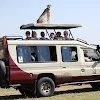
On a typical private Kenya safari, you'll travel in a specially equipped four-wheel-drive vehicle, often a Toyota Land Cruiser with large windows and a pop-up roof designed for wildlife viewing and photography. Vehicles used in some conservancies may have open sides instead. Both configurations have advantages, and the right choice depends on where you're traveling and the type of experience you prefer.
Your guide does considerably more than drive.
An experienced safari guide is constantly reading the environment. Tracks in the road can reveal which animals passed through recently. The direction of the wind can influence how predators approach prey. Alarm calls from birds or antelope may suggest that something dangerous is nearby, while circling vultures can indicate activity worth investigating.
Sometimes your guide will stop the vehicle, switch off the engine, and simply listen.
That might seem strange when you're eager to see your first lion, but these quieter moments are often where the experience becomes most interesting. A distant alarm call could lead to a predator sighting, or a fresh set of tracks might explain why an animal has disappeared into nearby vegetation.
And sometimes nothing happens at all.
That's something first-time safari travelers should understand. Wildlife isn't performing on a schedule, and even in a destination as productive as the Masai Mara, there will be periods when you're simply driving through beautiful country without a major sighting.
A lion might spend hours sleeping beneath a bush. A leopard could be resting in a tree completely hidden by leaves. A cheetah may abandon a hunt before it even begins. None of these animals is particularly concerned about whether you've traveled halfway around the world to see them.
But then there's the other side of the experience.
You might round a bend and find a pride of lions moving across the road. A family of elephants could emerge from the trees and cross directly in front of your vehicle. Or you might spend forty minutes watching a cheetah carefully position itself before attempting to chase a gazelle.
Those are the moments when you understand why experienced safari travelers are willing to sit quietly for so long.
The best guides don't simply race between sightings. They know when something is worth watching, when to change locations, and when leaving an animal alone is the right decision.
What Wildlife Can You Expect to See in the Masai Mara?
The Masai Mara has earned its reputation as one of Africa's premier wildlife destinations because it supports an extraordinary variety of animals throughout the year. Unlike destinations where wildlife viewing depends heavily on seasonal migrations, the Mara has substantial resident wildlife populations, meaning excellent sightings are possible even when the famous wildebeest herds are elsewhere.
Lions are among the park's greatest attractions, and the Mara's open grasslands make it one of Africa's most rewarding places to observe them. You may encounter family prides resting together, young males moving through unfamiliar territory, or lionesses watching herds of antelope from the cover of tall grass. The sheer amount of visible wildlife creates fascinating opportunities to observe predator-prey relationships, although witnessing an actual hunt is never guaranteed.
Cheetahs are another highlight. Unlike leopards, which often prefer wooded and riverine areas, cheetahs frequently hunt across open terrain where they can use their extraordinary speed. Finding one scanning the grasslands from a termite mound is exciting enough, but watching how carefully a cheetah evaluates potential prey can be even more interesting.
Leopards require considerably more patience. They're solitary, secretive animals that often spend daylight hours resting in trees or concealed vegetation. An experienced guide who knows the riverine forests and established territories can improve your chances, but even in the Masai Mara, a leopard sighting should be considered a special encounter rather than an expectation.
Elephants, giraffes, buffalo, zebras, hippos, and several antelope species are regularly encountered across the ecosystem. Spotted hyenas are also widespread, and their complex social behavior makes them particularly rewarding to watch. Then there are the smaller animals that often get overlooked: warthogs trotting through the grass with their tails raised, jackals searching for food, mongoose families darting between bushes, and an impressive variety of birds.
The Masai Mara is also home to all five animals traditionally grouped as the Big Five: lion, leopard, elephant, buffalo, and rhinoceros. But don't arrive expecting to check all five off your list in a single day. Black rhinos are relatively rare and localized, and even a well-planned safari can't promise every species.
What makes the Mara exceptional isn't simply the number of different animals you might encounter. It's the opportunity to observe how they live together in a functioning ecosystem, where predators, scavengers, and herbivores constantly influence one another.
And that's a much more interesting story than a checklist.
What Happens Between Morning and Afternoon Game Drives?
By midmorning, after several hours exploring the plains, it's usually time to return to camp. Depending on the schedule, you might arrive around 9:30 or 10 a.m., although longer morning drives and bush breakfasts can change the timing.
This is when the pace shifts.
After the excitement of the morning, breakfast back at camp can feel particularly satisfying. You might find yourself eating on a terrace overlooking the grasslands, talking about what you've seen, and trying to work out whether the photographs on your camera are anywhere near as impressive as the experience itself.
The middle of the day is generally quieter. As temperatures rise, many large mammals reduce their activity or seek shade, making the late morning and early afternoon a natural opportunity to rest. Most safari lodges and tented camps build this downtime into their daily schedules, giving travelers time to enjoy lunch, relax, read, review photographs, or simply watch the surrounding landscape.
And yes, safari accommodations can be genuinely comfortable.
A tented safari camp doesn't necessarily mean sleeping on the ground in a sleeping bag. Many properties in the Masai Mara offer spacious canvas suites with proper beds, private bathrooms, hot showers, electricity, and comfortable lounge areas. Some are exceptionally luxurious, while others focus on a simpler, more traditional bush experience.
The important thing is understanding that you're still in a wildlife environment. Depending on the camp, you may hear hyenas calling at night, lions roaring in the distance, or animals moving through the surrounding vegetation. Staff will explain the property's safety procedures, including whether you need an escort when walking between your accommodation and common areas after dark.
It's a strange combination, sitting down to a beautifully prepared meal while knowing that wild animals may be moving through the grass just beyond the camp.
But that's Africa. Comfort and wilderness aren't mutually exclusive.
And the quieter hours provide something many travelers don't expect to appreciate: time to absorb everything they've experienced rather than immediately rushing toward the next sighting.
The Afternoon Game Drive: When the Mara Comes Back to Life
By around 3:30 or 4 p.m., depending on the camp and season, it's often time to head out again. The temperature begins to drop, shadows lengthen across the plains, and animals that spent the hottest hours resting gradually become more active.
The afternoon game drive has a different atmosphere from the morning. The light becomes softer, the colors of the landscape deepen, and the grasslands take on the golden appearance that has made the Masai Mara famous among wildlife photographers.
This can be an excellent time to observe predators preparing for the evening. Lions may begin moving after spending much of the day sleeping, while hyenas become increasingly active. Elephants continue feeding and traveling between habitats, and large herds of herbivores graze across the plains.
But the most memorable sighting isn't necessarily a predator.
Imagine coming across a herd of elephants moving through the late-afternoon light, their bodies covered in a fine layer of red-brown dust. The adults move steadily through the grass while younger animals occasionally break formation to investigate something interesting. Behind them, the landscape stretches for miles, interrupted only by scattered acacia trees.
There's no dramatic chase, no roaring, and no immediate danger. Just a family of elephants going about its afternoon.
And somehow, that's enough.
One of the most important things to understand about wildlife photography is that getting closer doesn't always produce a better experience. The distance between the vehicle and the animals, the direction of the light, and the surrounding landscape can all be more important than filling the entire frame with a lion's face.
Your guide should position the vehicle responsibly, without blocking animals or interfering with their natural behavior. When a sighting attracts several vehicles, patience and respect become especially important.
As the afternoon ends, you'll make your way back toward camp. In the National Reserve, vehicles must comply with the reserve's closing hours. In some neighboring conservancies, the experience may continue with an authorized night drive or a designated sundowner stop.
Back at camp, dinner becomes an opportunity to exchange stories about the day. And there's a good chance the conversation will eventually return to that one animal you almost missed.
When a Full-Day Safari Makes More Sense
Not every day in the Masai Mara follows the same morning-drive, lunch-break, afternoon-drive schedule. Sometimes staying out for an entire day is the better option, particularly when wildlife activity, migration movements, or the location of your camp makes returning for lunch impractical.
On a full-day game drive, your guide will typically arrange packed meals, allowing you to explore more distant parts of the reserve and spend longer with interesting sightings. Breakfast or lunch may be enjoyed at an approved picnic area or another permitted location, with the vehicle serving as your base throughout the day.
This approach can be particularly valuable during the Great Migration, when large herds of wildebeest and zebra move through the greater Serengeti-Mara ecosystem in search of grazing.
Between roughly July and October, depending on seasonal rainfall and herd movements, large numbers of migrating animals may enter the Masai Mara from Tanzania's Serengeti. Some attempt to cross the Mara River, where strong currents, steep banks, and crocodiles make the journey dangerous.
But here's something you should know before planning your entire safari around a river crossing.
The wildebeest don't cross because a safari vehicle has arrived.
Herds may gather near the river for hours without making a move. Animals can approach the water, retreat, change direction, and return later. Sometimes crossings happen suddenly. Other times, travelers spend an entire day waiting and see nothing more dramatic than a few hundred wildebeest standing around looking confused.
That's wildlife.
A full-day drive gives you the flexibility to remain in an area when something interesting appears likely to happen. It also means longer periods in a vehicle, potentially rough roads, and fewer opportunities to return to camp for a break.
For travelers with young children or those who prefer a more relaxed pace, two shorter game drives may be a better choice. On a private safari, the advantage is having greater control over how much time you spend exploring, rather than following a fixed schedule designed for an entire group.
Where You Stay Changes the Safari Experience
One of the most overlooked decisions when planning a Masai Mara safari is whether to stay inside the National Reserve or in one of the neighboring conservancies.
The Masai Mara National Reserve is the best-known part of the ecosystem, encompassing extensive grasslands, riverine forests, and important wildlife habitats, including areas associated with the Great Migration. It's an outstanding destination for game viewing, but its popularity means certain sightings can attract substantial numbers of vehicles during busy travel periods.
Outside the reserve, conservancies such as Mara North, Naboisho, and Olare Motorogi operate on land owned by local Maasai landowners. These areas generally use tourism models that limit the number of camps or vehicles, helping support wildlife conservation while providing income to participating communities.
The wildlife doesn't recognize the boundaries between these areas, of course. Lions, elephants, cheetahs, and other animals move throughout the broader ecosystem, although the type and frequency of sightings vary by location and season.
What changes is how you're able to explore.
In the National Reserve, ordinary night game drives and walking safaris are prohibited. Some conservancies permit guided walking safaris and night drives under their own regulations, offering opportunities to experience the bush after dark or learn about animal tracks, vegetation, and smaller wildlife on foot.
There are advantages to both options, and one isn't automatically better than the other. Staying inside the reserve can provide convenient access to important wildlife areas, while a conservancy may offer a quieter experience with additional activities.
For some travelers, combining the two makes sense. But that requires careful planning around camp locations, entry fees, access arrangements, and the amount of driving involved.
The quality of your guide, the location of your accommodation, and the time you spend exploring matter considerably more than whether your lodge has the most impressive infinity pool.
What First-Time Safari Travelers Usually Get Wrong
Perhaps the biggest misconception about an African safari is that every day will resemble a wildlife documentary. People imagine lions hunting continuously, leopards lounging conveniently on exposed branches, and elephants appearing whenever someone raises a camera.
The reality is less predictable, and often much more interesting.
You'll have mornings when everything seems to happen at once. You may encounter several different predators, watch elephants interacting around a water source, and discover an animal you've never even heard of. Then you might have an afternoon when the most exciting encounter is a giraffe slowly feeding from an acacia tree.
Both experiences are part of a safari.
Another mistake is underestimating how tiring game drives can be. Even in a comfortable Land Cruiser, several hours on uneven tracks can leave you surprisingly exhausted. Dust, changing temperatures, and the constant excitement of searching for wildlife all contribute. Bring layers, sun protection, binoculars, and a camera if you enjoy photography, but don't feel obligated to photograph every animal you see.
Sometimes the best thing you can do is put the camera down.
Timing also matters. The Masai Mara offers rewarding wildlife viewing throughout the year, but the experience changes with the seasons. July through October is the most popular period because of the Great Migration, while January through March can be excellent for resident wildlife and predators without the same peak-season crowds. Rainier periods bring greener landscapes, different photographic conditions, and occasionally more challenging roads.
And don't try to squeeze the entire Masai Mara into a single afternoon.
Three nights provides a reasonable introduction, while four or more gives you a better opportunity to settle into the rhythm of the bush, explore different habitats, and enjoy wildlife encounters without feeling rushed. When possible, allowing more time is usually a better investment than trying to visit too many destinations in too few days.
A safari isn't a race to see the Big Five. It's an opportunity to experience a wild landscape on its own terms.
The Part of a Kenya Safari You Don't Expect
There's something that happens after a few days in the Masai Mara.
You stop checking the time.
At first, everything feels new. You're excited about every zebra, every giraffe, every movement in the grass. You constantly ask your guide what you're looking at, whether lions might be nearby, and how far you have to travel before the next sighting.
But gradually, your attention changes.
You begin noticing the smaller things. The way antelope react when a predator is nearby. The different calls of birds in the morning. The enormous variety of life that exists between the animals you originally traveled to see.
You start recognizing that an elephant feeding quietly beside a river can be every bit as fascinating as a lion stalking a herd of wildebeest. You appreciate the patience of a guide who knows when to stop talking, and you realize that the best moments often happen when nobody is trying particularly hard to make them happen.
That's what a good Kenya safari should give you.
Not simply photographs, impressive wildlife sightings, or a list of animals to tell your friends about when you get home. Those things are wonderful, of course. But the real experience is spending time in a place where the natural world still determines the rhythm of the day.
You wake before sunrise because that's when the wildlife is active. You stop the vehicle because something has caught your guide's attention. You wait because the animals haven't decided what they're going to do next.
And for once, you're perfectly happy having absolutely no control over what happens.
That's the thing about the Masai Mara. You arrive hoping to see something extraordinary. You leave realizing that the extraordinary part was being there in the first place.